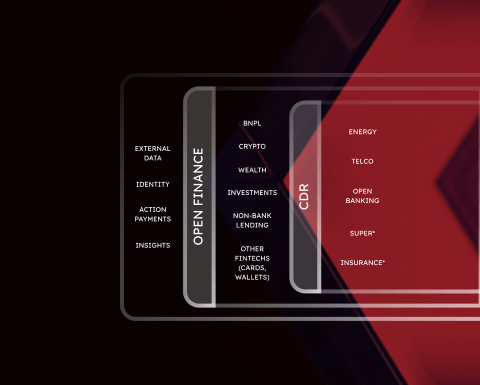

Basiq, a leading data aggregator, has released a new report, Changing Perspectives: An inside look at Open Banking performance and adoption in Australia, detailing critical findings on the performance and growth of Open Banking in Australia.
To date, Basiq has enabled over 900,000 Open Banking connections between consumers and businesses to help with tasks such as budgeting, investing, tax reconciliation and loan applications. It’s expected that by December 2024, the number of Open Banking Connections will hit 1.3 million.
The report analyses connection data from the Basiq platform including volume, success rates and ongoing performance, benchmarking it against the performance of web scraping. Web scraping, also known as Digital Data Capture (DDC) or screen scraping, is the widely used alternative and predecessor to Open Banking.
Analysis of the data has revealed three key findings:
Finding 1: Open Banking growth is booming
The popularity of Open Banking is steadily increasing, challenging the perception of slow growth and minimal uptake. Between October 2022 and March 2024, Open Banking experienced a 30 per cent compounded growth rate on the Basiq platform, with connections rising from 10,400 to 777,000. In the last 12 months, almost 50 per cent of all new connections on the Basiq platform were made via Open Banking.
Finding 2: Open Banking leads to more customers
Contrary to the belief that Open Banking results in high consumer drop-off, Basiq has found its success rate is almost double that of web scraping, with 80 per cent chance of success compared to 42 per cent. Financial institutions implementing more robust anti-scraping measures and heightened business and consumer concerns regarding data security are impacting connection success rates.
Finding 3: Open Banking is superior for ongoing connections
Only 0.17 per cent of Open Banking connections face disruption after six months, compared to 15 per cent for web scraping, making Open Banking 88 times more reliable for businesses requiring ongoing connections, such as budgeting or investment apps.
“We wanted to release our findings publicly to challenge the existing negative Open Banking narrative and provide a more optimistic perspective backed by data,” said Damir.
“While Open Banking is far from perfect, the highly critical views circulating do not reflect the reality we see,” Damir continued. “Our platform data and customer feedback tell a very different story – one of growth and success.”
“Acknowledging that connection performance is only one factor impacting Open Banking’s growth, we intend to dive into other key topics, including data quality, in future reports,” closed Damir.
Important Information: This article has been prepared by Basiq Pty Ltd (ABN 95 616 592 011) (Company), and was originally published on 4 July 2024 on www.basiq.io. Information is current as at the publication date, and the Company has no obligation to update or correct this article. The information contained in this article is of a general nature and is not intended to address the objectives or needs of any particular individual entity, and should not be regarded in any manner as advice. To the extent permitted by law, the Company and its related bodies corporate will not be liable for any errors, omissions, defects or misrepresentations in the information in this article or for any loss or damage suffered by persons who use or rely on such information (including for reasons of negligence, negligent misstatement or otherwise. © 2024 Basiq Pty Ltd