
Skip to Content

Forward with Ray: Finding Purpose in Data and Payments


Could you tell us a bit about yourself and your role at Cuscal?

I’ve been at Cuscal for a year now. I initially joined as a Senior Manager for Data Governance to build a team focused on uplifting Cuscal’s overall ways of governing our data, in line with the regulatory requirements of being a financial institution.

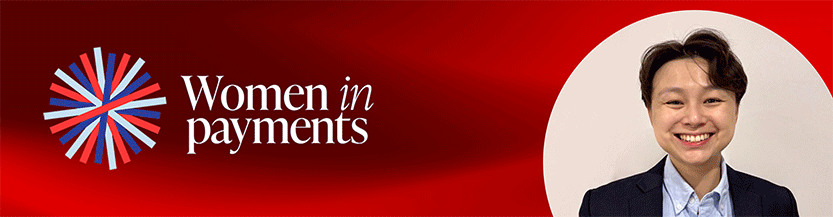
Most recently, I’ve taken on additional responsibility, leading the team that manages our Data Platforms, Governance, and Data Risk. In this role, I set the direction for how we manage data and its associated risks across the entire lifecycle, ensuring we treat data as a strategic asset. This includes overseeing the development of new data solutions and strengthening data management and governance practices across Cuscal.


What’s the most interesting or exciting part of growing your career at Cuscal?

The environment at Cuscal is quite different from a large organisation. I previously worked at one of the “Big Four”, where I was very deep into one specific component of a large framework.

At Cuscal, I can focus on breadth rather than depth. I’ve been able to contribute my experience across different knowledge components, ensuring I can manage the whole data lifecycle and contribute widely, while leaving the deep specialisation to the experts on my team. The ability to drive end-to-end strategy here is far more exciting than at a big bank.


What sparked your initial interest in the payments industry, and how has your journey evolved since then?

Sometimes, working in a corporate data role, it’s difficult to explain to people how you meaningfully contribute to the community’s day-to-day life. My partner works at a hospital and sees that tangible impact every single day. In payments, we also make a difference, but it’s not always immediately visible to everyone.

The reason I moved to payments was that I wanted to find more purpose in my field. Now, I can directly see how I’m helping the Australian community make those essential daily payments at the grocery store or the medical centre.

We are a B2B organisation, serving banks, mutual banks, and fintechs so their customers can have real-time payments and more. My team manages the critical controls between our core systems and the settlement reports we send to our clients for regulatory compliance. If the data is incorrect, our clients cannot comply with financial regulations. Our work is crucial for ensuring transactions are accurate and reliable. That’s how my team helps keep the financial ecosystem running smoothly.


Can you share a pivotal moment or challenge in your career that shaped who you are today?

Early in my career, I was in management consultancy. I started as a graduate and was quickly exposed to how different industries operate and how to communicate with diverse stakeholders – from the C-Suite and middle management to the people actually executing the work. That was pivotal because it helped me build the skills needed to connect with, talk to and understand how any organisation operates.

In my data leadership role at Cuscal, I focus on bridging the gap between diverse data needs across the organisation. Everyone has different requirements for data, and it’s critical to understand the key outcomes expected by stakeholders—from data engineers to senior leadership. Whether it’s a request for NPP (New Payments Platform) statistics or RBA compliance, I interpret these needs and translate them into actionable tasks for my team.

This ability to communicate effectively at multiple levels and turn complex requirements into meaningful insights has been fundamental to my career—and it’s what makes data a true strategic asset at Cuscal.


What do you believe are the most significant changes or opportunities in the payments industry right now?

The payments industry is evolving rapidly from cash and cheques, to cards and now to instant payment products, like PayID® and NPP. Customers today expect speed, convenience and security, and that expectation is driving innovation.

The biggest opportunity lies in using data to understand how customers interact with payment products. These insights allow us to design solutions that are faster, smarter and more relevant. For Tier 2 and mutual banks, this is critical to staying competitive and trusted in a market dominated by larger institutions.

Another major shift is the rise of scams and fraud, which makes it essential to build resilient payment infrastructure that can withstand these threats while ensuring secure and seamless delivery of payments. Combining strong governance with innovation will be key to creating safe, reliable and customer-focused solutions.

Consumers should be given more options, empowering them to access payment solutions that suit their lifestyle while maintaining trust and security. The focus must be on innovating and delivering safe, compliant and customer-focused payment products that meet evolving expectations.


What advice would you give to others, especially women, looking to build a career in payments?

This is an area where, unfortunately, we don’t see as many women. My advice to women, or anyone curious about payments and data, is that there is space for you if you are willing to learn.
If you are curious, step into it. Find mentors who can encourage you to look beyond the current workforce, which is still quite male-dominated in this specific field.

Ultimately, you are the only person who can provide yourself with that opportunity. Don’t let yourself be the one who limits your potential.

Cuscal is proud to nominate Ray for a prestigious Women in Payments Award. These awards honour women payments professionals who have demonstrated exceptional leadership, innovation and promise. Find out more about the awards.


Forward with Jackie: Driving DEI and People-First Leadership

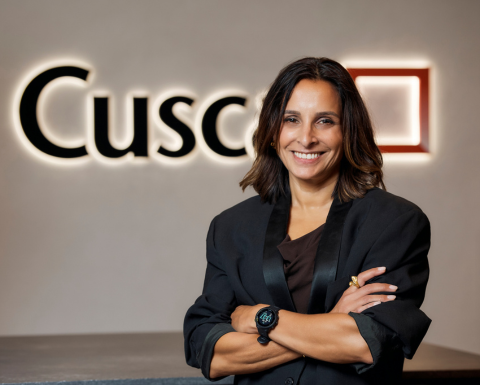
When Jackie Gubanyi joined Cuscal four years ago, she saw an opportunity to drive real cultural change. Since then, our Senior Human Resources People and Culture Business Partner has spearheaded the company’s first Diversity, Equity and Inclusion strategy and Reflect Reconciliation Action Plan (RAP). Now as one of our Women in Payments Awards nominee’s, Jackie shares how she has created a more inclusive workplace, her thoughts on artificial intelligence’s impact on the payments industry and why taking a non-linear career path might be your greatest advantage.


Could you tell us a bit about yourself and your role at Cuscal?

I’ve been with Cuscal for four years, starting as a People and Culture Business Partner, and I was promoted to Senior People and Culture Business Partner in 2024. I’ve had the opportunity to support nearly every area of the business, which has given me an incredible, holistic view of Cuscal’s operations.

In a nutshell, my role is to ensure that Cuscal’s people have a great experience. That includes everything from engagement and culture to leadership coaching, organisational change and strategic workforce planning. It’s about creating a safe, legally compliant and genuinely inclusive environment where people feel empowered to bring their whole selves to work.


What’s the most interesting or exciting part of growing your career at Cuscal?

The fact that I’ve been empowered to spearhead so many amazing initiatives that have genuinely impacted the organisation. When I first joined, our formal diversity, equity and inclusion (DEI) framework was somewhat limited. I was incredibly passionate about that space, so I put my hand up and essentially volunteered to create one!

Creating a formal DEI strategy was a mammoth task. We developed our DEI strategy by actively listening to our employees—gathering their insights, lived experiences, and feedback to ensure our approach was inclusive, meaningful, and truly reflective of our organisational culture. We then wove those insights into all aspects of our employee life cycle, including our Environmental, Social and Governance (ESG) framework and our Employee Value Proposition (EVP).

I then realised we needed to go one step further and create our Reflect RAP. This was another year-and-a-half-long commitment, which involved creating a working group, deeply exploring Cuscal’s position on reconciliation, and commissioning the beautiful artwork that now represents our commitment. Getting the plan approved by Reconciliation Australia was no easy task, but an incredibly rewarding one.

My role has allowed me to lead these really big, interesting pieces of work. Being able to drive such profound cultural change while in a Business Partner role has been the most exciting part of my journey here.


What sparked your initial interest in the payments industry, and how has your journey evolved since then?

I’ve been in the payments industry for about 14 years now, including four with Cuscal. It’s simply a fascinating space to be in. It’s fast-paced and ever-changing. There’s always something happening, whether it’s new regulations, new products coming to market, or new players entering the field.
It is absolutely a growing space, not a dying industry. No matter what the currency – whether it’s through bartering, gold or digital transfers – we are always going to need to pay people. It’s an industry that’s foundational to modern commerce, and that constant evolution keeps it incredibly stimulating.


Can you share a pivotal moment or challenge in your career that shaped who you are today?

At my previous organisation, I began as an human resource (HR) generalist and later transitioned into employee relations (ER), where I focused on navigating complex and often sensitive people issues. Combining that ER expertise with my broader HR background gave me a unique and well-rounded perspective. This dual lens has been instrumental in shaping how I approach organisational culture and, importantly, how I contribute to DEI initiatives.

Understanding the nuances of employee relations has helped me recognise systemic barriers and advocate for fair, inclusive practices. It’s also enabled me to balance the need for a psychologically safe and empowering workplace with the operational realities of compliance and fairness. That foundation has been key to driving meaningful cultural change and embedding DEI into every aspect of how we work.


What do you believe are the most significant changes or opportunities in the payments industry right now?

As an HR professional, artificial intelligence (AI) is the biggest change. The massive question is: What does that mean for our employees?

This is a huge, ongoing organisational change, and we need to ensure people feel supported, safe and free to utilise these new technologies and skills. We need to help them understand that AI won’t necessarily impact their careers negatively; it will help their roles evolve.
This change touches every aspect of my role: upskilling, change management, and the safety and ethical considerations of it all. It’s massive, and it’s happening now.


What advice would you give to others, especially women, looking to build a career in payments?

Don’t be too fixated or hung up on the end game of your career. Take different roles and opportunities as they come to you. You need to gather exposure to different skills, capabilities and experiences because you never know where it will take you.

If someone suggests you consider an opportunity, consider it! Don’t just dismiss it because it doesn’t meet a rigid, defined career path. There is no linear approach to success. Gaining knowledge and experience across different areas is far more important to help you progress than following a predefined route.

Cuscal is proud to nominate Jackie for a prestigious Women in Payments Award. These awards honour women payments professionals who have demonstrated exceptional leadership, innovation and promise. Find out more about the awards.


Important Information: Information in this article is current as at 14 November 2025 and is subject to change. This article represents the opinions and views of the personal experiences of the panellists only. This article is provided for general information purposes only and does not have regard to the situation or needs of any reader and must not be relied upon as advice. Before acting on this information, consider its appropriateness to your business. Cuscal Limited ABN 95 087 822 455.
Forward with Pooja: The Product Pioneer Helping Shape Industry Milestones

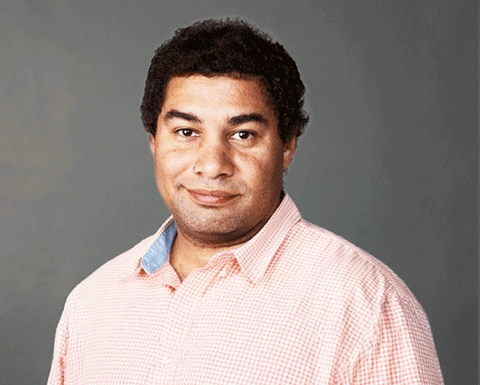
Pooja Sainani has been involved in some of the most pivotal moments in Australian payments history. As Cuscal’s Product Solutions Manager and our inspiring Women in Payments Awards nominee, she is driven by the tangible impact of payments and technology on everyday life. In this Q&A, Pooja discusses her remarkable career journey, the fraud and scam challenges facing the industry, and why she is determined to “flip the narrative” about what it means to be the only woman in the room.


Could you tell us a bit about yourself – both your role at Cuscal and what you enjoy outside of work?

I currently work as a Product Solutions Manager within the newly created Product Solutions & Innovation team. We sit across all Cuscal’s products, engaging with technology, risk, legal and sales departments. We mainly work on new initiatives that align with Cuscal’s strategic objectives, whether they come from clients, industry trends or regulatory changes.

My career at Cuscal has been very progressive with organic growth. Before this role, I was a Client Solution Consultant and a Solutions Architect. As an Architect, I was a generalist – I designed technology for most of the services Cuscal offered, from acquiring and issuing to direct entry and disputes management. This gave me a broad, foundational understanding of everything we do, which is incredibly useful in my role now.

Outside of work, I have a nine-year-old daughter, and I love spending time with her. We love music and dancing. We do social line dancing, and we have a karaoke session every Friday. We are always karaoke ready!


What’s the most interesting or exciting part of growing your career at Cuscal?

Overall, I’ve been with Cuscal for 16 years, including five years at SPS (Strategic Payment Services), which Cuscal acquired in 2014. We joke at Cuscal that you either stay for two years or 20, and I’m definitely on the path to 20!

What’s been most exciting is that my growth has been organic and often sideways. I’ve had the opportunity to move into several newly created teams. Sometimes leaders saw potential in me and offered me these roles because I could highlight how my technical background, combined with client experience, would benefit new initiatives. Each move built on the last: as a Solutions Architect, I learned about products, which helped me in consulting, and my consulting experience helped me see the strategic and innovation side of what we could do in Product Solutions & Innovation.


What sparked your initial interest in the payments industry, and how has your journey evolved since then?

I started as an IT Developer, so my initial focus was on software development rather than payments. But I soon became fascinated by the tangible, real-life impact of the payments software I was building.

When I was developing solutions for ATMs and POS (Point of Sale) devices, whenever I went to a café or supermarket, I’d check what terminal they were using and think, “I know exactly how this works.” That fascination with seeing the technology I worked on affecting people’s everyday lives drew me deeper into payments.

The evolution of payments since 2012 has been immense. We’ve gone from going to an ATM to take out money to simply tapping our phones to pay at a shop. Of course, with these modern advances come serious challenges, like fraud and scams. I find this side fascinating, too. Solving these issues is critical because payments impact every single person. It is truly a people connection.


Can you share a pivotal moment or challenge in your career that shaped who you are today?

I’ve been lucky enough to be involved in a few defining moments in Australian payments history. One was when Cuscal partnered with Square, a fintech company from the United States, to support the launch of its services in Australia. I was a Solutions Architect at the time, and seeing the challenges involved in adapting a fintech platform to meet Australia’s unique payment regulations was fascinating and really deepened my understanding of the local landscape.

Another major moment was the launch of the ‘Pays’ mobile payments – Google Pay, Apple Pay, and Samsung Pay. I was part of the design process, working with these global companies, as well as Visa, MasterCard and eftpos. Designing the solution that made mobile payments possible for the entire nation across every POS device was incredibly exciting and rewarding. Being part of the eftpos Technology Steering Committee at that time also made me feel like I was part of something much bigger.


What do you believe are the most significant changes or opportunities in the payments industry right now?

Fraud and scams are the absolute centre of everything right now. Cuscal is in a very interesting position. Because we process payments and have vast datasets which are critical to fraud monitoring. It will be amazing to see Cuscal as a leader in Australia for fraud monitoring in future.

The most significant opportunity is to use data to help mitigate fraud and scams. For me, the correlation between advanced data usage and better fraud monitoring is where the industry needs to play to make things safer for everyone.


What advice would you give to others, especially women, looking to build a career in payments?

My first piece of advice for women in payments or any male-dominated industry is simple: If you think you belong at the table, you belong at the table. Don’t shy away from showing your capabilities because you fear they won’t be liked.

My second piece of advice is: Put your hand up for things outside your current function and teams. It gives you the platform to learn other parts of the business, meet different people, and also show other capabilities. I participate in various groups – recent ones being cyber champion and a responsiveness working group.

For young women, particularly in tech, I want to flip the narrative. I have often been the only woman – the first female developer in an organisation, the only female architect in the team. I never felt discouraged; I felt proud and encouraged as Cuscal is great at supporting talent. We need to build that confidence in girls, to acknowledge their capability, from a young age.

Cuscal is proud to nominate Pooja for a prestigious Women in Payments Award. These awards honour women payments professionals who have demonstrated exceptional leadership, innovation and promise. Find out more about the awards.


Diversity, equity, and inclusion (DEI) at Cuscal

Diversity, equity, and inclusion (DEI) are more than just principles, they are embedded in how the Cuscal operates, leads, and grows. We’re committed to creating a workplace where every individual, regardless of their background, identity, or experience, feels safe, included, and empowered to thrive. Our commitment stems from the understanding that when people thrive, the business thrives too. DEI is a meaningful journey, with progress already underway in areas including gender pay equity and leadership representation.

Cuscal recognises that DEI extends beyond gender, embracing cultural diversity, First Nations inclusion, LGBTQIA+ representation, neurodiversity, and diversity of thought. Initiatives such as our hybrid working models and our neurodiverse-friendly office space are already making a difference. We acknowledge that building a truly inclusive workplace and culture takes time. Our employees are encouraged to actively champion DEI in their daily work, helping to shape a respectful, inclusive, and forward-thinking culture.

Watch the video and see our Chief Legal and People Officer, Freya Smith discuss moving DEI forward at Cuscal.