

Skip to Content

Harnessing Open Banking to Fight Superannuation Fraud

harnessing-open-banking-to-fight-superannuation-fraud

The closure of more than 1.4 million superannuation accounts in 20231, accompanied by disbursements exceeding $58 billion1, creates ample opportunities for exploitation by fraudsters. Manual methods employed for verifying bank account information are not only time-consuming but also prone to errors, providing openings for fraudsters to gain access to these substantial funds. 

Unauthorised access to Superanuation funds

Incidents of identity theft further contribute to fraudulent activities, enabling unauthorised access to superannuation accounts. The prevalence of data breaches over the last few years, leading to the exposure of personal and financial data, offers fraudsters the necessary information for the manipulation or misuse of superannuation accounts. 

Armed with this stolen identity data, perpetrators are able to assume the identity of their victims, navigating past security protocols to gain unauthorised access to superannuation accounts. Once inside, they are able to execute unauthorised withdrawals of substantial sums of funds. 

As criminals evolve in their strategies, the urgency to fortify the security measures within the superannuation sector becomes increasingly apparent.

The use of Open Banking

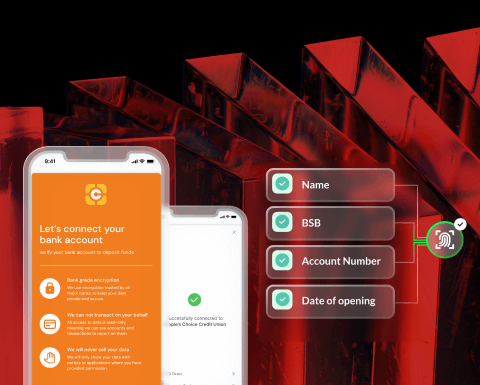
Connect by Basiq offers a comprehensive solution to fight fraud through real-time bank account verification, ensuring that superannuation withdrawals are seamlessly transferred to the intended recipients. Basiq streamlines the account verification process through secure Open Banking authentication, eliminating the need for consumers to disclose sensitive login/password information. Members initiating fund withdrawals online are simply redirected to the website/app of their nominated bank account, creating a secure and user-friendly experience while eliminating traditional steps of asking for bank account details.

TelstraSuper has embraced Open Banking to mitigate the risk of fraud. By leveraging Open Banking, TelstraSuper validates member bank account information swiftly and securely, facilitating faster transactions without the need for cumbersome hard-copy documentation.

How does it work?

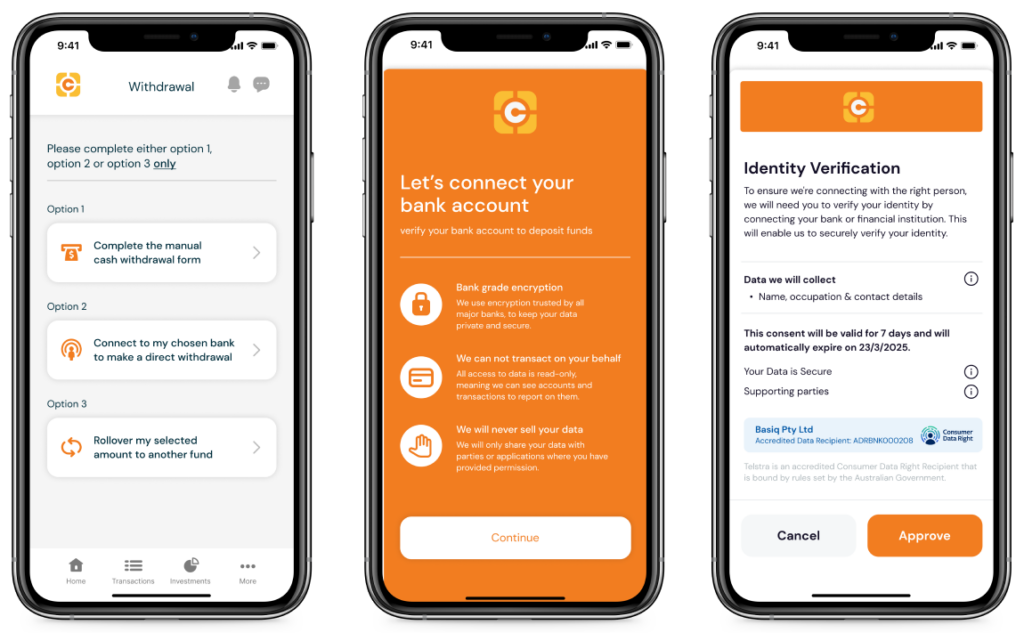
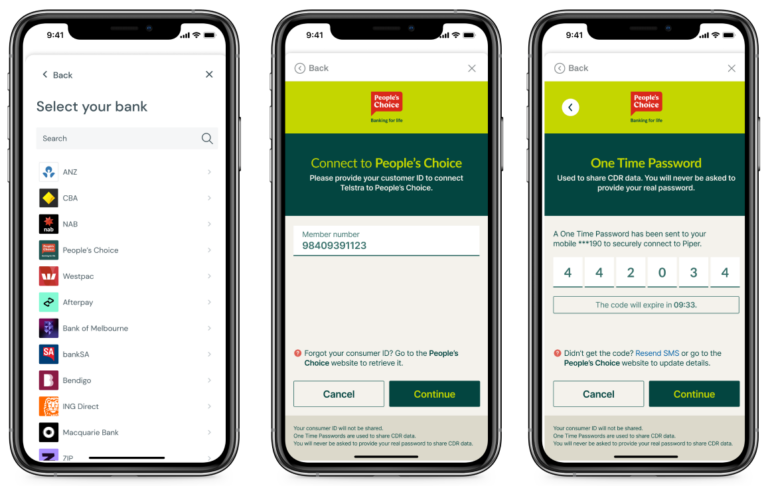
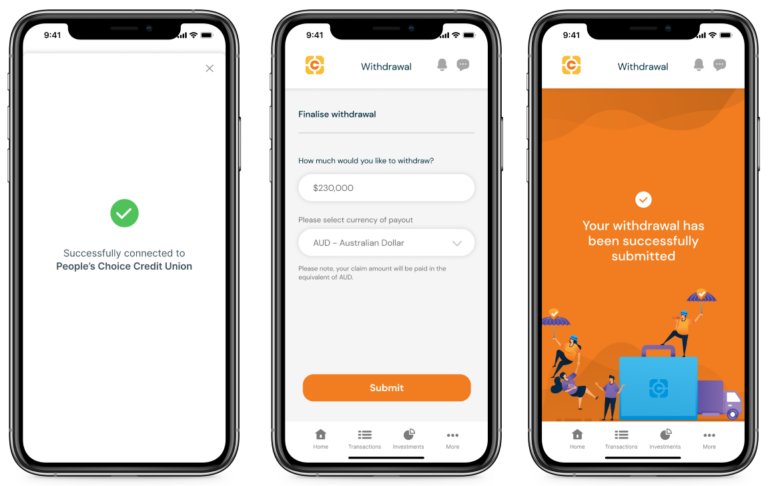
Step 1 – Member opts to transfer funds into their bank account

Step 2 – Member verifies by logging into their bank account

Step 3 – Once their bank account is successfully verified and connected, the amount to be withdrawn can be processed

Other benefits of Open Banking for Superannuation

Connecting a user’s bank account extends beyond verifying the account for transferring Superannuation funds. Financial data retrieved through the member’s various financial institutions helps create a comprehensive financial picture. Such insights enable financial advisors to provide more accurate and tailored advice, enhancing the overall financial guidance provided to superannuation members.

In addition, financial data can be used to help improve member engagement. By integrating a member’s financial data from different institutions with their superannuation data, a consolidated view of their net wealth can be created. This consolidated view allows for the development of user-friendly tools like dashboards and real-time alerts, helping members stay up to date and engaged with their financial journey and goals.

AI, machine learning and fraud

Nuno Sebastiao, CEO of Feedzai presented AI at the centre of a crime free financial world at Curious Thinkers 2018 in Sydney.

He gave an overview of the machine learning capabilities of the Feedzai fraud prevention platform. He described how Feedzai uses artificial intelligence and machine learning to continuously learn from the massive amounts of data it processes and provide state-of-the-art fraud prevention.

Kieran McKenna (Cuscal), Leila Fourie (AusPayNet), Nigel Butler (Valocity) & Richard Harris (Feedzai) joined Nuno in a panel discussion on unlocking new tech to drive business growth.

Watch the AI, machine learning and fraud video to learn more.

Fraud and AI: what you need to know

Artificial Intelligence (AI) is already having a significant impact on the way we do business today. From helpful chat bots guiding us through complex purchase journeys to detecting potentially fraudulent payments, AI has the potential to create seamless customer experiences while simultaneously processing large amounts of information.

Machine learning frees humans from the grunt work of data tracking and pattern analysis – it’s faster, more scalable and learns from past information. No wonder Gartner predicts that more than 40% of data science tasks will be automated by 2020.

So when it comes to balancing customer demand for real-time payments with secure fraud-mitigating authentication, AI is an effective enabling tool for fraud teams to focus their investigation skills in the best place to securely ensure the speed and rigour required for a real-time payment. And that’s why more organisations are exploring the use of AI, especially in the area of fraud.

What role could AI play in fraud prevention and detection?

Through machine learning, the complexity of big data really becomes useful. At Cuscal, we have partnered with Feedzai to provide an advanced risk management platform that will be core to protecting Cuscal clients from the evolving threat of fraud.

“When using Feedzai, banks have significantly improved fraud detection, reduced false positives and overall a better customer experience – outperforming leading non-AI solutions – that’s why banks like Citi and Capital One have backed Feedzai’s technology.” said Richard Harris, SVP Sales International from Feedzai.”

With so many more payment channels available – online, mobile, P2P – there are more points of vulnerability. More than ever, we need a complete view of customer activity across products, an integration of channels to improve the customer experience, and to make more data-backed business decisions.

How will AI strengthen existing fraud protection systems?

With AI’s ability to analyse complex data in real time, fraud teams are better equipped to predict fraud before it occurs and so minimise losses.  AI reduces some of the noise of large amounts of data to focus on the real threats.  As we prepare to launch the New Payments Platform (NPP) in Australia, we can expect to see digital transaction processing converge with analytics providing better insights. Machine learning will enable organisations to look at more data, from more sources, and make better predictions with less uncertainty.

Of course, bots could be working on both sides – and the next generation of AI-enabled fraud systems will also need to be prepared to tackle new and increasingly sophisticated fraud attempts and scams.

Every Australian financial institution connecting to the New Payments Platform (NPP) needs to consider their real-time fraud monitoring and ensure effective controls are in place. AI is likely to underpin best practice – checking every transaction in real time for anomalies and flagging suspicious activity for action by experienced fraud investigation teams.

Learn more about preventing fraud in a real-time world.

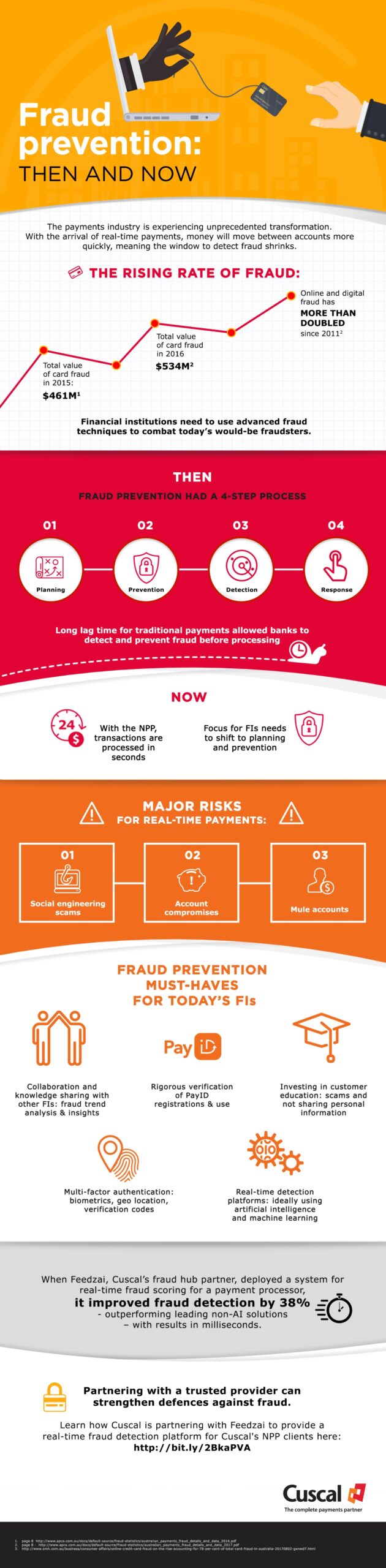
Fraud prevention: then and now

Fraud & AI Infographic

Learn more about preventing fraud in a real-time world.

By Michelle Trundle, Senior Manager, Fraud

4 ways financial institutions are preparing for the NPP

People sitting in a row using digital devices

What happens when payments are as easy and immediate as sending a text message? While the digital opportunities of Australia’s new super-fast payments system are exciting, its speed may also increase the potential risk of fraudulent transactions. The NPP (New Payments Platform) isn’t more vulnerable to security breaches, but banks will no longer have the luxury of time to detect and respond to fraudulent or suspicious transactions.

And that’s why Australian financial institutions are already preparing for NPP – by shifting their risk focus to planning and prevention.

The NPP is a platform that enables real-time clearing and settlement for simple or complex payment solutions, between two people or between many. When it launches next year, almost all Australian bank account holders will be able to make and receive payments in seconds.

The promise of bank transfers clearing almost instantly – even on bank holidays and weekends – is alluring for consumers, business and government. But when payments happen faster, there won’t be time for our tried and tested detection processes. Based on the UK’s experience with its Faster Payment Service, the most common risk is likely to be social engineering scams, where fraudsters convince a customer to make a payment by posing as a trusted brand. Account compromises and mule accounts (for money laundering) are other possible fraud issues.

Any financial institution connecting to the NPP will need to have real-time fraud detection and response controls in place.

As one of the primary architects of the NPP, Cuscal is working with more than 30 financial institutions to securely connect to this game-changing banking infrastructure. Here are four ways we’re working with our clients to get ready.

1. Preparing for PayID verification. 

Forget BSBs and account numbers – with the NPP, bank accounts can be linked to the customer’s email address or mobile phone number. Easier to remember, these PayIDs are directly associated with the actual account name so there’s less risk of paying the wrong person. While this will help ensure payments go to the right place – it will also impact current payment verification protocols.

Financial institutions are responsible for registering customer information in PayID, and may be liable for any loss that results from incorrect or fraudulent data input. That’s why the account name associated with the PayID is an important control checkpoint and one banks need to pay particular attention to.

2. Setting strong controls for detail changes. 

Every PayID can be changed – for example, if a customer gets a new phone number – so banks are setting up new control processes to ensure customer detail updates are verified. Participating financial institutions can also set their own customer transaction limits.

Reassuringly, the NPP solely focuses on actively authorised payments: every payment must be approved by the account holder so there is no assumption of authority (as there is with direct debits or can be with credit card payments). This protection complements the strong authentication procedures that banks have in place when updating account details, as knowing the account number is not enough for a fraudster to access someone else’s account.

3. Sharing knowledge. 

Typical customer payment patterns are critical for fraud prevention, and Australian banks already have good visibility of this data. By working with Australian financial crime investigation and enforcement agencies, institutions are able to quickly identify scams and other fraudulent activity.

Financial institutions can supplement this shared knowledge with additional layers of real-time fraud monitoring. At Cuscal this includes a specialist fraud monitoring team, AI-enabled pattern recognition and data analysis and integration with the NPP’s inbuilt fraud detection capabilities.

4. Educating customers. 

Changing habits is always hard – so to establish trust in the security of this payment platform, financial institutions are investing in ongoing education programs. As well as helping Australian consumers and businesses select and manage their PayIDs, they are building awareness of current scams, how to report fraudulent transactions, and how to protect their identity.

Our digital economy never sleeps – but neither will fraudsters. To ensure the NPP doesn’t open the door to a new scam opportunity, Australia’s financial institutions are already preparing for this latest wave of payment innovation.

Learn more about preventing fraud in a real-time world.

By Nathan Churchward, Senior Manager, Payments